
When Unity Is Real
What if life was organised around contribution rather than pressure to survive?
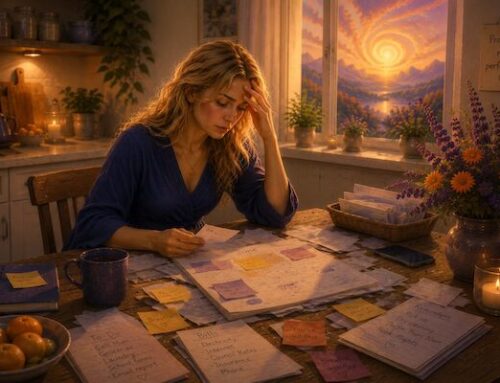
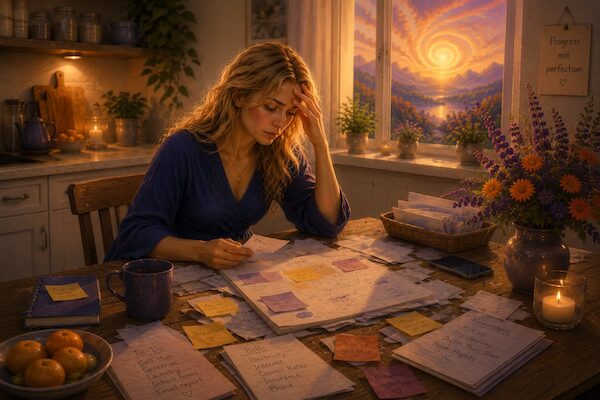
There was a time when I believed my exhaustion was because I wasn’t doing enough. That if I could just get more organised, more efficient, more disciplined, I would finally feel like I was keeping up.
Like many people, I assumed the answer was to work harder.
And so I kept going. Kept pushing. Kept looking for the strategy that would make it all feel sustainable.
Yet beneath the exhaustion was a question I couldn’t ignore — one that had nothing to do with my productivity and everything to do with the shape of the world I was trying to be productive inside.
Why did life feel increasingly difficult to sustain, even when so many of us are working harder than ever? And why did rest begin to feel like something that had to be earned?
The more I sat with that question, the more I began to wonder whether the exhaustion so many of us carry isn’t simply personal.
Perhaps it was structural.
Perhaps many of us are trying to flourish inside systems organised around survival rather than life.
Because when I look around, I see people contributing everywhere. A mother tending to her children through the long, invisible hours. A friend supporting someone through grief. A neighbour quietly checking in on someone who might otherwise go unseen. An artist refining a vision that hasn’t yet found its audience. A person navigating illness while still trying to remain present to their life.
Not all of this contribution produces measurable income. And yet it is contribution, unmistakably — the kind that holds communities together, that carries life forward, that makes existence meaningful.
Still, somewhere beneath much of modern life sits an unspoken assumption: if your contribution cannot be easily measured, it has little value.
This is where many people begin to feel the tension. Because life itself does not operate this way.
The forest does not invoice the trees for producing oxygen. The river does not withhold water until every creature has proven its worth. Nature participates through relationship. Through exchange. Through circulation. And in that movement, every part plays its role, not because it has earned the right to exist, but because belonging is the very condition of the ecosystem.
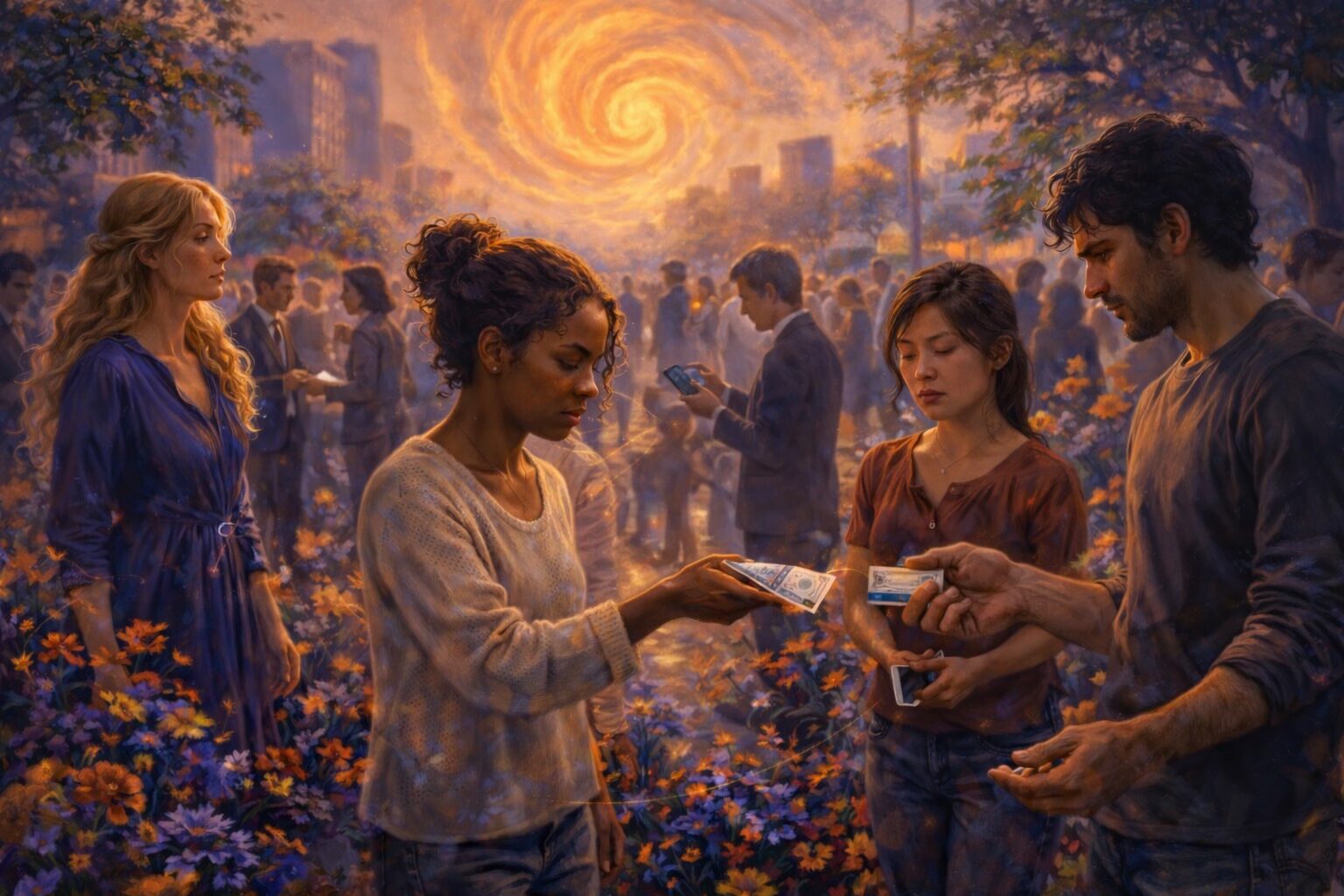
And yet many human systems have become organised on a different logic —around conditional access, around scarcity, around the belief that survival itself must be earned.
As I reflected on this, another image emerged.
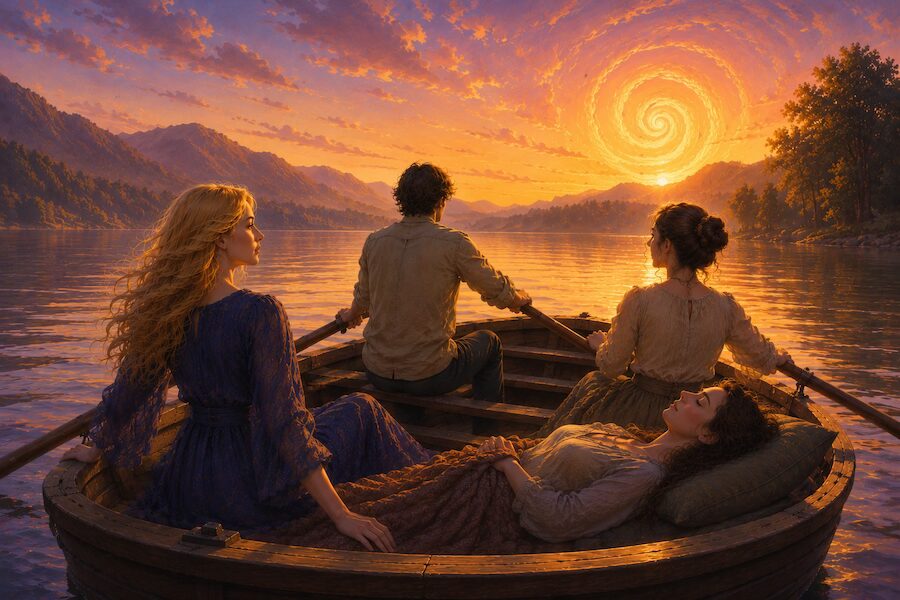
A boat.
If four people are rowing a boat and one becomes tired or injured, the others naturally adjust. They do not throw that person overboard for failing to maintain their output. They understand, instinctively, that everyone moves through seasons — that sometimes we row, sometimes we are carried, and sometimes we simply need to heal. And over the course of a life, these roles change many times.
This is how healthy living systems understand support. It flows where it is needed. Strength circulates. Resources move. Life adapts.
Yet so many of the structures we inhabit seem to move in the opposite direction. The moment someone’s capacity shifts, pressure often intensifies. Support becomes conditional. Rest requires justification. Care is measured. Worth is assessed. And participation becomes tied to performance.
Over time, this creates a subtle but profound distortion.
People begin organising their lives around avoiding insecurity rather than expressing their deepest contribution.
Fear becomes a motivator.
Pressure becomes normal.
And survival quietly replaces flourishing.
What strikes me is that most people can feel this, even when they cannot name it. They know what it is to need rest but feel unable to stop. To need support but hesitate to ask. To carry real gifts to offer the world that doesn’t fit neatly into any existing structure. To sense that something about the arrangement is no longer quite human.
The question, then, is not simply about money. Money is one form of exchange, not the problem itself.
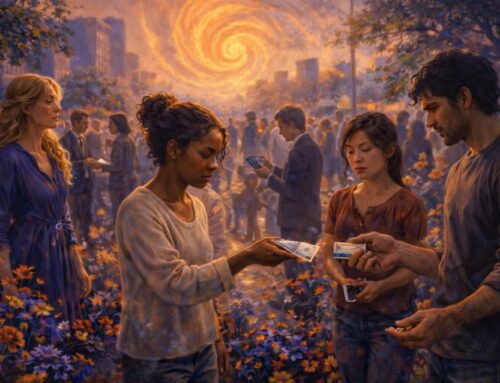
The deeper question is what happens when access to life itself becomes conditional. When food, shelter, belonging, and care are increasingly tied to performance, qualification, and measurable output.
And what happens to human potential — to our creativity, our wisdom, our capacity for genuine connection — when survival pressure consumes so much of our attention?
On Stewardship and Ownership
There is a difference between stewardship and ownership, though we don’t always pause to name it.
Stewardship says: This is here to be cared for, shared, and passed on.
Ownership says: This is mine to control, restrict, and profit from.
Neither structure nor exchange is the issue — both have their place. But something shifts in a society when stewardship gives way entirely to control. When the basic conditions of human life — food, water, shelter, land — cease to be held in common and become things that must, first and always, be earned.
And yet these are not inventions of humanity. They are expressions of the Earth itself.
The Fear Beneath the Conversation
One of the first concerns people raise when we begin speaking about a different relationship to value is:
“What happens if people stop working?”
It is a reasonable question. But I find myself sitting with a different one.
What happens to human beings when contribution becomes disconnected from meaning, from relationship, from their own natural gifts?
The current system often assumes people must be pressured into participation through survival itself — that without sufficient pressure, contribution would cease.
And yet it is worth pausing on that assumption for a moment. Because when we look at those who have already been freed from survival pressure — those with enough that contribution is genuinely optional — we don’t automatically see an outpouring of generosity or meaningful participation. Sometimes we do. Often, we see the opposite: elaborate structures built to withhold, to protect, to accumulate further still.
Which suggests that fear doesn’t dissolve with wealth. It simply changes its clothing. At one end, the fear of not having enough. At the other, the fear of losing what one has. Both, in their own way, lead to the same contraction — a closing inward rather than a flowing outward. And perhaps this is the quieter truth beneath the whole conversation: that what unlocks genuine contribution isn’t pressure, and isn’t comfort either. It’s the healing of the fear that tells us, at every level of the ladder, that we are not quite safe enough to give. And perhaps, just as quietly, not safe to receive.
Because when I look honestly at the world, I don’t see masses of people unwilling to contribute.
I see exhausted people. Burnt-out people. I see carers with little support, and parents stretched beyond capacity. I see creative people with no space to create. Sensitive people carrying real insight who have never been given the conditions to cultivate it.
Many are not unwilling to contribute. They are simply disconnected from the conditions that allow their deepest participation to emerge.
Perhaps the issue is not that human beings need pressure to engage with life. Perhaps it is that we have built systems requiring people to survive in isolation from the very forms of relationship and support that allow meaningful participation to flourish.
What The Nature of True Contribution Might Look Like
Imagine for a moment a world where each person had the genuine opportunity to discover and cultivate their own particular gifts – not as a luxury, or a reward for sufficient productivity, but as a natural part of being human.
Some would teach. Some would build. Some would grow food, create beauty, care for the vulnerable. Some would steward land. Some would innovate and solve problems no one else could yet see. Human beings are naturally creative. Naturally relational. Naturally participatory. The desire to contribute is rarely absent. More often, it is buried beneath fear, exhaustion, and the relentless pressure to justify one’s place in the world.
When survival pressure softens, something remarkable becomes possible. People begin offering what is most alive within them. And the quality of participation changes. Contribution becomes an expression of life rather than a requirement for existence.
What Real Unity Actually Means
This conversation moves beyond economics, in the end. Because true unity is not sameness. It is not dependency. It is not the removal of individual responsibility.
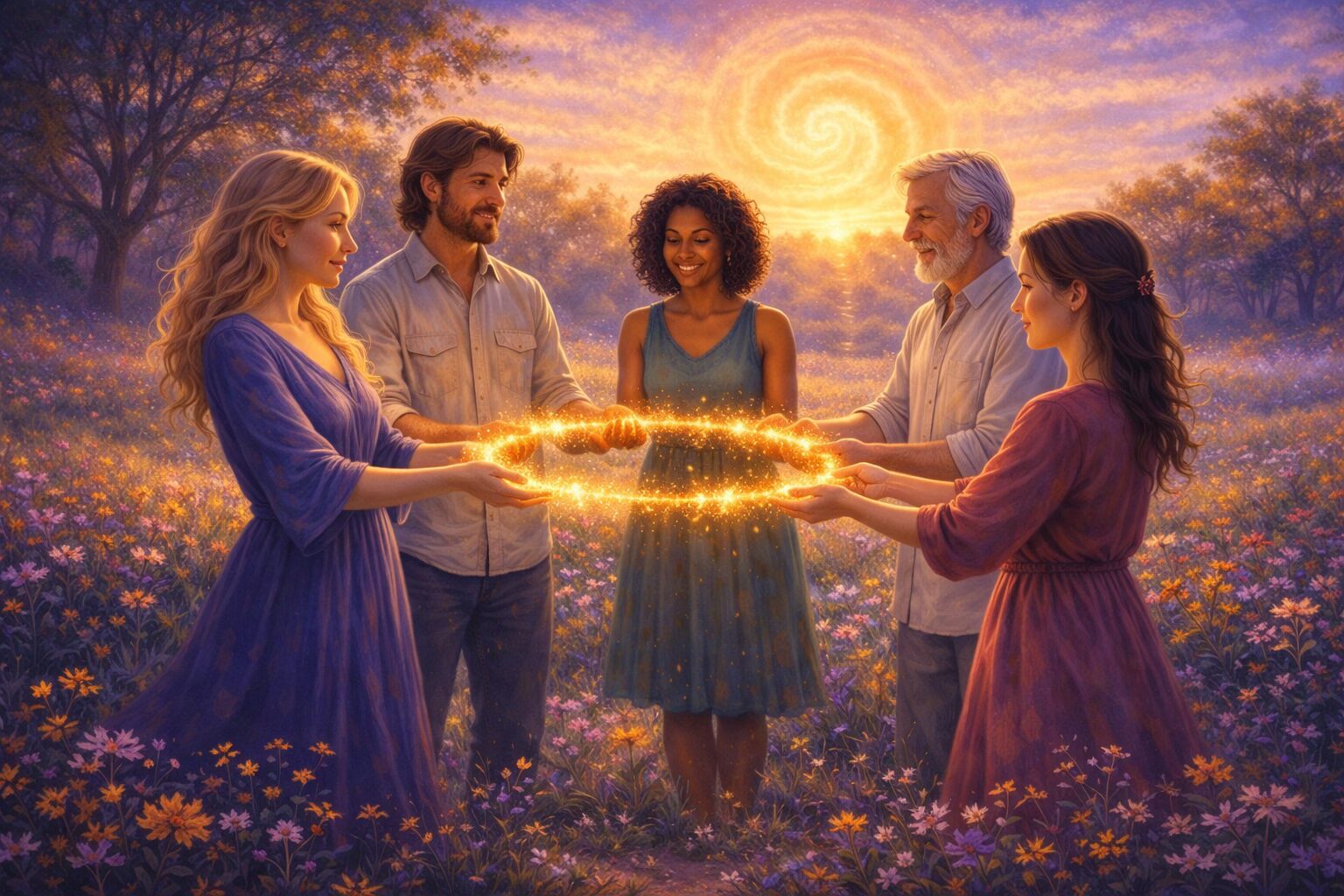
It is the recognition that none of us flourish entirely alone — just as no healthy ecosystem survives through isolated competition.
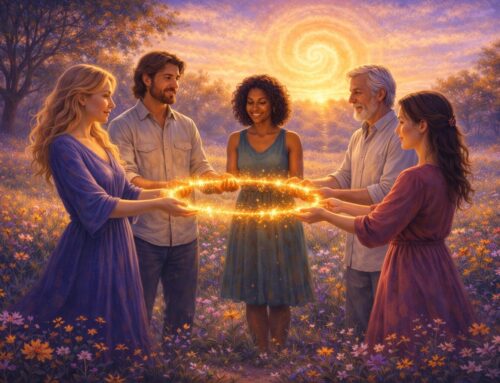
In a living system, support circulates. Value circulates. Resources move. Leadership shifts. What emerges from that kind of movement is not dependency but reciprocity. Not control but genuine participation. Not extraction but relationship.
None of this requires money to disappear, or structure to be abandoned, or markets to cease. What changes is their position — money as one measure of value among many, rather than the only one. Contribution recognised in its many forms. Communities made more resilient through the circulation of care, creativity, and real support.
Perhaps the future is not one where humanity works less. Perhaps it is one where more of us are free to contribute what we actually came here to contribute.
The exhaustion so many feel may not be personal failure, poor planning, or lack of motivation. It may be a signal — a reminder that life flourishes through relationship, through reciprocity, through meaningful participation.
The future may not be built through greater pressure. It may be built by restoring the conditions that allow life itself to flourish.
And perhaps that begins by asking a single, honest question:
What becomes possible when contribution is no longer driven by fear, but by the genuine desire to offer something of ourselves to something greater than ourselves?




Leave A Comment