

Ending the Inheritance of Emotional Illiteracy
There are moments I still recognise in myself — not as memories that have passed, but as something that returns when life feels uncertain.
It often begins in a way that almost feels normal.
A slight tightening in the chest. A heaviness that doesn’t quite belong to the moment. A thought that lingers just beneath the surface, waiting to be acknowledged.
And then, I find myself searching for somewhere it can land.
I look around my life. I run through the names.
I reach for my phone, scrolling slowly, pausing here and there as if the answer might reveal itself if I just linger long enough.
Who could I bring this to? Who could actually receive me — without trying to fix it, soften it, reframe it, or make it mean something else?
But as I pause on each name, there is a recognition that arrives before any action is taken.
A knowing that this part of me will not be fully received there.
Not in the way it is asking to be.
So the phone lowers again, gently, almost instinctively.
The moment closes before it ever fully opened.
I learned very young that emotional support would never come…
And so I return to what I have known to do for much of my life.
I carry it.
I sit with it.
I let it move through me in the ways that I know how — breathing, feeling, allowing the sensation to unfold without turning away from it.
There is a steadiness in that now. A capacity that has grown over time.
And still, beneath that steadiness, something tender remains.
A longing to be held in the middle of it.
It would be a relief… to not carry it alone. Not to be fixed, or guided, or even understood perfectly. Simply to feel that someone could stay.
If you’re honest, you may recognise this too.
The moment something real enters a conversation, and the space around you shifts.
The way the body of the other person adjusts almost imperceptibly. The way their eyes begin to move, searching for somewhere to escape to. The slight pause before the tone changes, and the conversation finds its way back to something more familiar.
Work. Plans. The weather. Anything that asks less of the moment.
And just like that, what was alive a moment ago disappears from the shared space.
The connection returns. But the truth of what was there does not.
This is where many of us learned something without anyone ever saying it out loud. That certain parts of us are something we carry alone.
The Inheritance We Rarely Name
Many of us were raised within care, effort, and a genuine desire to do what was right. And yet, something essential was often missing. The steady, grounded capacity to remain with what is real.
We inherited ways of relating shaped by those who came before us — adults who couldn’t name what they felt, who feared conflict, who avoided grief, who intellectualised pain, who rushed toward solutions, who mistook silence for peace.
This is the inheritance – a limitation of capacity.
And so something subtle passes from one generation to the next.
Not only the trauma. But the absence of someone who could remain present with it.
What the Body Stores
The hurt does not always arrive when the moment happens. The body has its own intelligence.
Sometimes it waits.
It waits for space. For quiet. For the smallest sense of safety.
And when it comes — sometimes years later — it often meets the same absence.
So we do what we were taught.
We distract. We analyse. We minimise. We try to move on.
And we carry it alone, unsure what else to do.
The rest of this piece explores where this pattern lives in our relationships, our workplaces, our healing spaces, and what becomes possible when presence itself changes the field.
The Field That Changes Everything
We live in a time where we learn to approach emotion as something to manage — we try to process, regulate, or resolve.
But presence is not something we do to our feelings. It is how we relate to them.
Over the years, something has revealed itself again and again through my work.
People do not transform through better advice. They transform when something within them recognises it is safe to be seen.
When nothing in them needs to pretend. When nothing needs explaining. When nothing is being fixed, shaped, or improved.
Simply received.
In that space, life begins to reorganise. The nervous system settles. The layers of defence soften. And what has been waiting — sometimes for years —naturally begins to rise, because it has finally found the conditions it needed to move.
Presence does not rush an emotion to completion. It allows it to unfold.
And when something is allowed, it often begins to move naturally, because it was finally received.
Where We Learned to Look Away
We see this pattern everywhere.
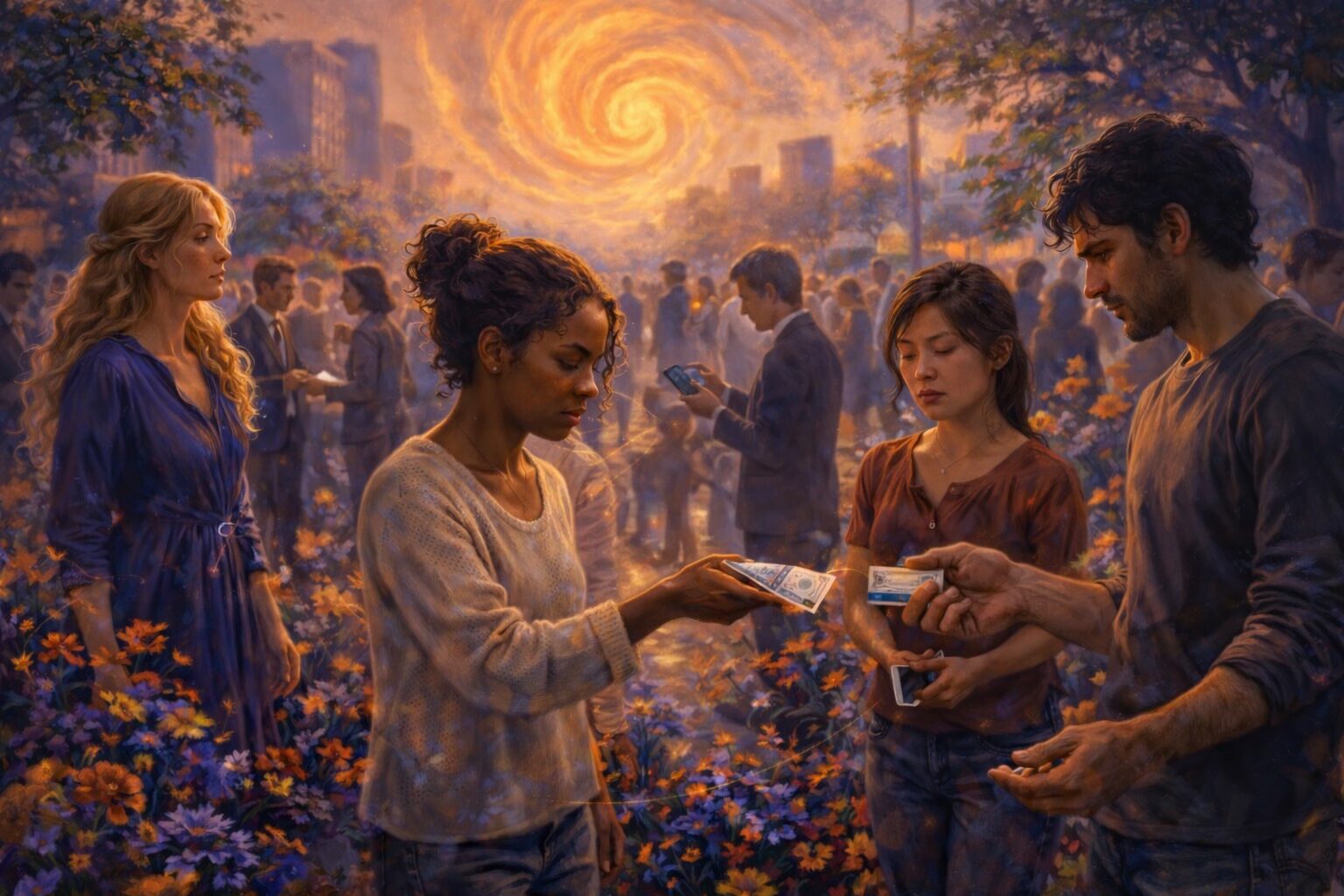
Within families. Within partnerships. Within workplaces where emotion is quietly redirected. Within healthcare spaces where clinical care may be offered, but human presence is often limited by time, pressure, or skillset. Even within healing spaces, where the urge to release, clear, or transform can sometimes move faster than the feeling itself.
This is not a critique.
It is a recognition of what has been learned – that we cannot offer what we have never been shown.
Yet what has been learned can evolve.
The Practice of Staying
Presence is not something we perfect. It is something we grow into.
Moment by moment.
We begin where we are — with the feeling that arises unexpectedly, with the moments we would usually avoid, the feelings we would rather move past, the sensations we have learned to silence.
And instead of rushing away…
We stay.
Not to analyse, fix, or change it.
But to be with it.
Gently. Steadily.
And as we learn to remain within ourselves, something becomes possible.
We find ourselves able to remain with others in a way that once felt out of reach.
Because we cannot accompany another somewhere we have not yet learned to stay within ourselves.
The Edenic Field
Nature offers this truth quietly, without instruction.
A river finds its way through the landscape without force. A seed opens when the conditions are right.
Life responds to its environment and presence is part of that environment.
It is the climate in which life softens, opens, and reorganises. Where truth becomes easier to hear, and where something held for a long time can finally release its grip.
A New Way of Relating
Perhaps the deepest wound we inherited was not the pain itself. But the absence of someone who knew how to remain present with it.
And so it continued. Quietly. Unintentionally. Until someone begins to do something different.
Every moment of presence begins to shift that inheritance.
Every moment you remain with what is arising within you.
Every moment you stay with another without rushing to fix, explain, or move away…
Within the spaces you touch, something shifts and a new way of relating begins.
A willingness to remain.
Is there a part of you that has been waiting — not to be fixed, understood, or improved — but simply for company?
Not only the hard things. The hopes, too. The dreams still taking shape. The fears you haven’t said aloud even to yourself. Someone who notices when you’ve gone quiet, and reaches back.
For someone to sit beside what is real without needing it to become something else.
You don’t need to answer it immediately.
Just notice.
And perhaps, for a moment…
Allow yourself to stay.
In my work, this is the space I hold.
A space where you are no longer alone with what is real.
Where nothing needs to be rushed.
Where what has been waiting can finally be received. In its own way. Naturally. In its own time.
As life always has.








Leave A Comment